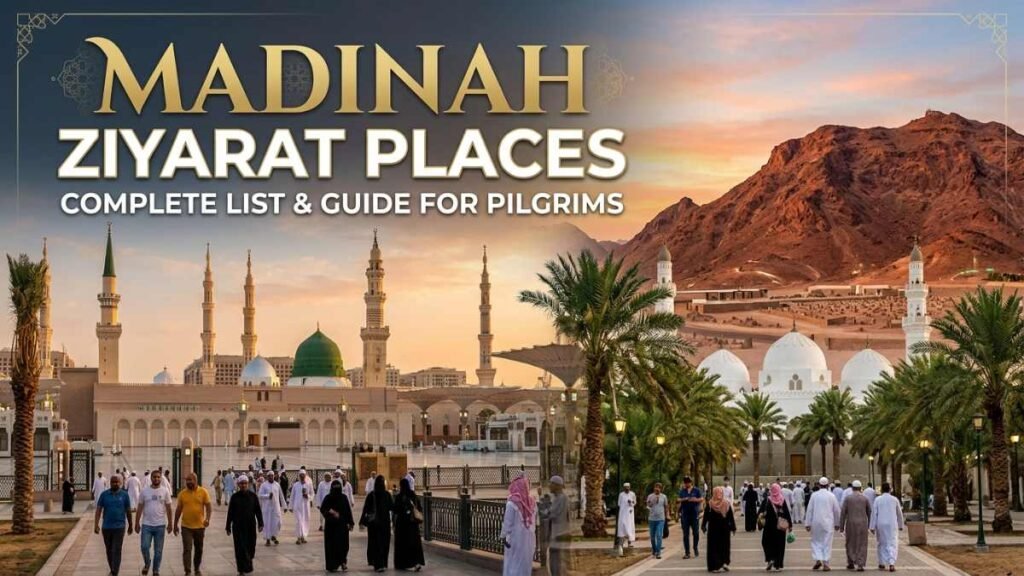
Madinah is one of the most special places for Muslims. Many pilgrims visit the city after performing Umrah in Makkah. They come to pray at Al-Masjid an-Nabawi and learn about the life of Prophet Muhammad (peace be upon him).
This Complete Madinah Ziyarat List will help you explore the most important historical and Islamic sites in the city. Our Madinah Ziyarat guide for Umrah pilgrims covers famous places such as Masjid Quba, Mount Uhud, Masjid al-Qiblatain, and Jannat al-Baqi. You’ll also find useful details about locations, distances, travel plans, and visiting tips.
Before you set out, check current access rules and opening times, as they may change. With a little planning, you can make your Madinah visit more comfortable and meaningful.
What Is Madinah Ziyarat and Why Is It Important?
Madinah Ziyarat means visiting important Islamic sites in Madinah to learn about their history and connection to Islam. For many Muslims, it’s a special part of their journey to Saudi Arabia for Umrah. These visits help pilgrims learn more about the life of Prophet Muhammad (peace be upon him), the early Muslim community, and key events in Islamic history.
What Does Ziyarat Mean?
Ziyarat means a visit. During their stay in Madinah, pilgrims often visit places such as Masjid Quba, Mount Uhud, and Masjid al-Qiblatain. These sites each have a story that helps visitors understand the history of Islam. Learning about them before your trip can make each visit more meaningful.
What Should Pilgrims Know Before Visiting?
As you explore the historical places to visit in Madinah, dress modestly, respect local rules, and keep the sites clean. Remember that visiting a historic place is not the same as performing an act of worship. Follow reliable Islamic sources for religious guidance, as some stories shared online may not be well supported.
This Madinah Ziyarat guide for Umrah pilgrims will help you learn about the best places to visit in Madinah for pilgrims and plan your trip with care.
The Most Important Madinah Ziyarat Places
Madinah has many sites linked to the early days of Islam. Each place has its own story, from the first Muslim community to key events in the life of Prophet Muhammad (peace be upon him). This Complete Madinah Ziyarat list covers the main places many pilgrims hope to visit during their stay in the city.
You don’t need to visit every site in one day. Choose the places that matter most to you, allow time for travel, and check local access rules before you leave.
1. Al-Masjid an-Nabawi
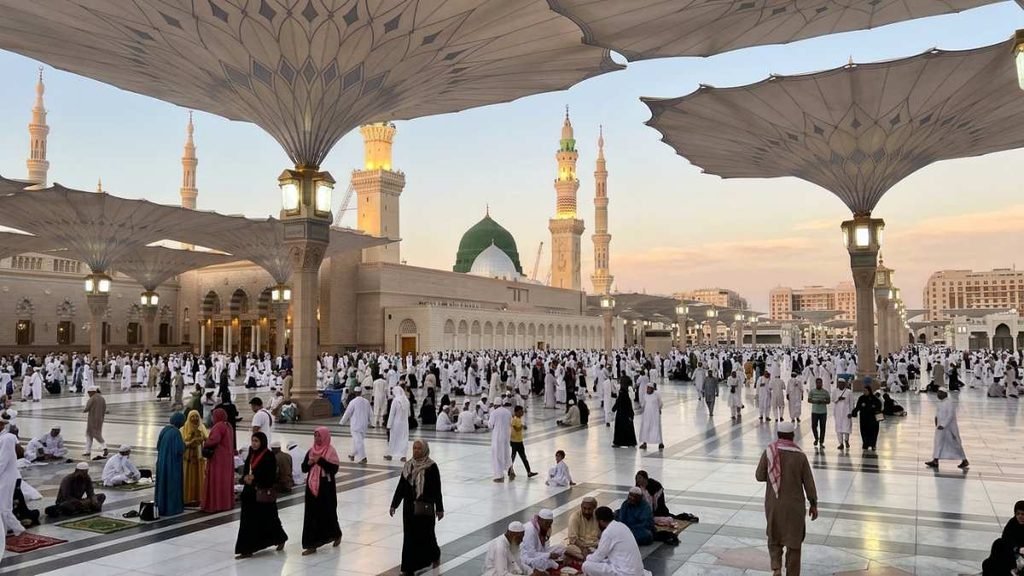
Al-Masjid an-Nabawi, also called the Prophet’s Mosque, is one of the most important mosques in Islam. Prophet Muhammad (peace be upon him) helped establish the mosque after arriving in Madinah. It remains a central place of prayer for Muslims from around the world.
Plan enough time to enter, pray, and move through the mosque without rushing. Follow the signs and instructions from mosque staff, especially during busy times. If you hope to visit the Rawdah, check the current booking rules through the official Nusuk platform.
2. Jannat al-Baqi
Jannat al-Baqi is a historic Muslim cemetery near Al-Masjid an-Nabawi. Many companions of Prophet Muhammad (peace be upon him), members of his family, and other early Muslims are buried there.
Visitors should act with respect and keep their voices low. Access may be limited to certain times or groups, so check the latest local rules before planning your visit. Follow the posted guidance and avoid blocking paths or gathering in restricted areas.
3. Masjid Quba
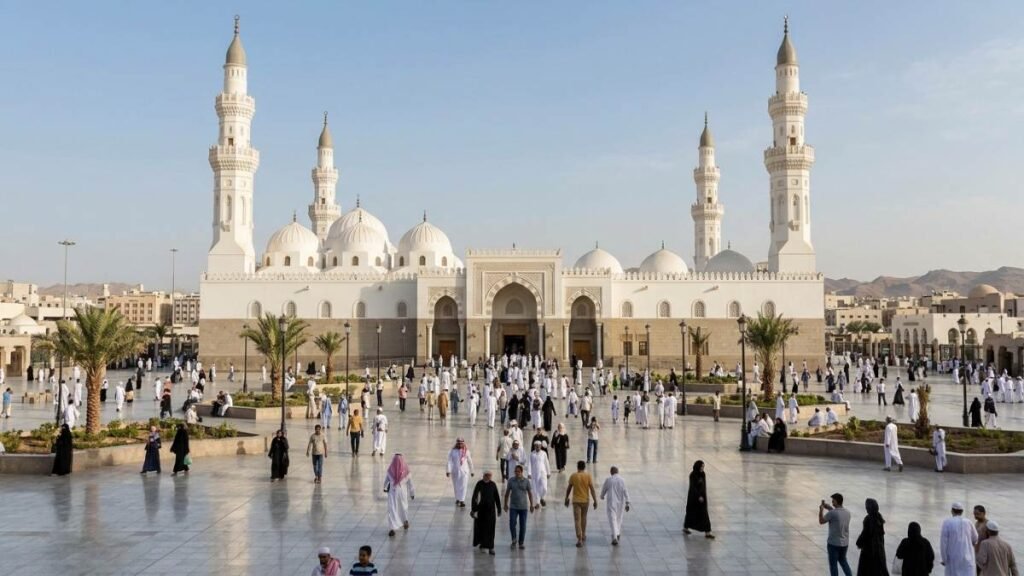
Masjid Quba is closely linked to the early Muslim community in Madinah. It is widely known as the first mosque established by Prophet Muhammad (peace be upon him) after his arrival in the area.
The mosque is south of central Madinah, so many visitors travel there by taxi or car. You can include it in a wider tour of nearby sites. Check current prayer times and access guidance before you go, and leave extra time if you plan to visit during a busy period.
4. Mount Uhud and the Uhud Martyrs Cemetery
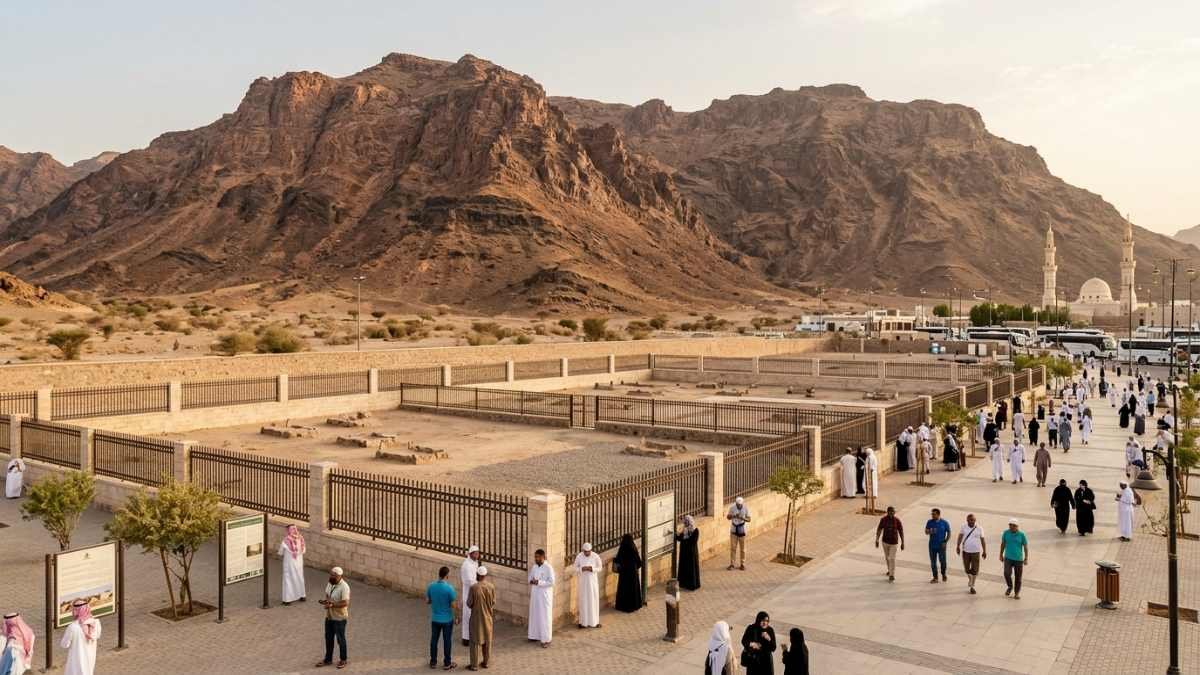
Mount Uhud is one of the most well-known historical places to visit in Madinah. It is linked to the Battle of Uhud, which took place in 625 CE. Many Muslim fighters lost their lives in this battle, including Hamza ibn Abdul Muttalib, the uncle of Prophet Muhammad (peace be upon him).
Visitors often come to learn about the battle and see the area where it took place. Wear comfortable shoes, carry water, and take care in hot weather. Follow signs and respect any areas that are closed to visitors.
5. Masjid al-Qiblatain
Masjid al-Qiblatain is known for its connection to the change in the direction of Muslim prayer. According to Islamic history, Muslims were instructed to turn toward the Kaaba in Makkah instead of Jerusalem.
The mosque is in the northwestern part of Madinah. You can visit it as part of a wider tour that includes other historic sites. Check current access rules before your trip.
6. The Seven Mosques Area
The Seven Mosques area is linked to the Battle of the Trench, also known as the Battle of Khandaq. Muslims built a trench around parts of Madinah to help defend the city during the battle.
The area is a popular stop for visitors interested in early Islamic history. Despite its name, the group of sites has changed over time, and not all the original structures remain. Check which sites are open before visiting.
7. Other Historical Sites Worth Knowing
Masjid al-Ghamamah is another historic mosque near Al-Masjid an-Nabawi. It is linked in local tradition to events from the time of Prophet Muhammad (peace be upon him). You may also come across other historic sites during your trip.
Before adding any place to your Madinah Ziyarat list, check its history with reliable sources and confirm whether visitors can enter. This will help you plan a useful tour and make the most of your time in Madinah.
Madinah Ziyarat Places With Distance and Location
Knowing the distance between Ziyarat sites can help you plan your trip around Madinah. Some places are close to Al-Masjid an-Nabawi, while others need a short drive. When checking Ziyarat places in Madinah with distance, remember that travel time can change due to traffic, crowds, road access, and the weather.
Which Ziyarat Places Are Near Masjid Nabawi?
Jannat al-Baqi and Masjid al-Ghamamah are close to Al-Masjid an-Nabawi. Other sites, such as Masjid Quba, Mount Uhud, Masjid al-Qiblatain, and the Seven Mosques area, are farther away and are often easier to visit by car or taxi.
The Seven Mosques in Madinah location is in the area linked to the Battle of the Trench, west of central Madinah. Check your route before leaving, as road closures and busy periods can affect your journey.
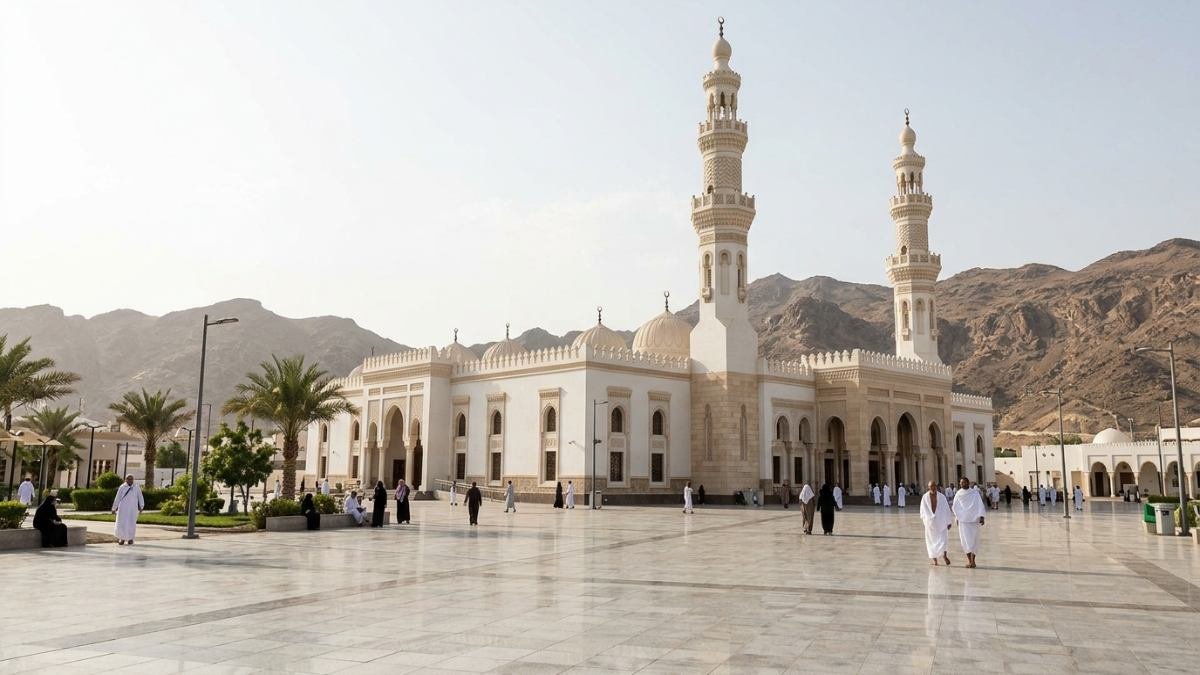
Distance Table for Popular Ziyarat Sites
Use this table to compare common Madinah Ziyarat places near Masjid Nabawi. Distances are rough estimates from the mosque area and may vary by route.
Madinah Ziyarat Taxi
+1
| Ziyarat place | Approx. distance | Suggested transport |
| Jannat al-Baqi | Adjacent to the mosque | Walk, if access is allowed |
| Masjid al-Ghamamah | About 0.5 km | Walk |
| Masjid Quba | About 3.5 to 4 km | Taxi or car |
| Masjid al-Qiblatain | About 4 to 5 km | Taxi or car |
| Seven Mosques area | About 4 to 5 km | Taxi or car |
| Mount Uhud | About 5 to 7 km | Taxi or car |
Before setting off, check the route on a current map. Travel times can change with traffic, crowds, and local access rules. If you’re visiting with children or older family members, allow extra time for rest and walking.
How to Plan a Madinah Ziyarat Tour
Planning your visit before leaving your hotel can save time and make your trip more comfortable. A good Madinah Ziyarat tour itinerary groups nearby places together, so you spend less time travelling and more time exploring.
A Simple Half-Day Ziyarat Itinerary
For a half-day trip, you could start with Masjid Quba, then visit Masjid al-Qiblatain and the Seven Mosques area. If time and local access allow, you can also visit Mount Uhud. The best route depends on traffic, your starting point, and how long you want to spend at each site.
If you’re wondering how long Madinah Ziyarat takes, a short tour may take around three to four hours. Visiting more sites or spending extra time at each stop can take longer.
Should You Walk, Use a Taxi, or Book a Private Tour?
Walking works well for nearby places, especially around Al-Masjid an-Nabawi. For sites spread across the city, a taxi can save time and effort. A Madinah Ziyarat taxi service may be a good choice for families, older pilgrims, and visitors with limited time.
Before starting, confirm the total fare, waiting time, planned stops, and drop-off points. This helps you avoid confusion during the trip.
A Local Example for Families and Older Pilgrims
Imagine a family travelling with older parents and young children. Instead of rushing to every site, they choose three stops, carry water, and allow time to rest. This slower plan can make the tour easier and more enjoyable for everyone.
Practical Tips for Visiting Madinah Ziyarat Sites
A little planning can make your Ziyarat trip in Madinah easier and more comfortable. These tips will help you prepare for the weather, choose what to bring, and follow local rules during your visit.
Best Time to Visit
Madinah can get very hot, especially during the summer months. If you’re visiting outdoor sites such as Mount Uhud, check the weather and try to avoid the hottest part of the day. Traffic and crowds can also affect your plans, so allow extra time for each stop.
If you plan to visit Madinah Ziyarat places near Masjid Nabawi, check the walking distance and current access rules before leaving your hotel.
What to Bring and Wear
Wear comfortable shoes, carry drinking water, and choose light, modest clothing that suits the weather. Keep your phone charged so you can check maps and contact your driver if needed. Older pilgrims may also benefit from a walking aid or regular rest breaks.
Access, Permits, and Respectful Conduct
Follow signs, respect prayer areas, and listen to staff at each site. Access rules may change, so check official Saudi sources before your visit.
As part of this Madinah Ziyarat guide for Umrah pilgrims, remember that visiting historical sites is different from entering the Rawdah in Al-Masjid an-Nabawi. Rawdah visits may require a separate appointment through the official Nusuk platform. Check the latest rules and booking options before your trip.
Frequently Asked Questions About Madinah Ziyarat
How Many Ziyarat Places Are There in Madinah?
There isn’t one fixed number of Madinah Ziyarat places. Some guides list only the main sites, while others include smaller mosques, historic landmarks, and places linked to early Islamic history. Most visitors can start with Masjid Quba, Mount Uhud, Masjid al-Qiblatain, and the Seven Mosques area.
How Long Does a Madinah Ziyarat Tour Take?
A short tour may take around three to four hours. A longer trip can take half a day or more, depending on the number of stops, traffic, and time spent at each place.
Can You Visit Madinah Ziyarat Places Without a Private Taxi?
Yes. You can walk to some nearby sites or use taxis and other available transport. Choose the option that fits your budget, travel plans, and comfort needs.
Do You Need a Permit to Visit Rawdah?
Rawdah visits may require a separate appointment through the official Nusuk platform. Check the latest booking rules before you go, as access requirements can change. A general Ziyarat tour does not automatically include a Rawdah appointment.
Conclusion
Madinah is home to many important Islamic sites that help pilgrims learn about the history of Islam. From Al-Masjid an-Nabawi and Masjid Quba to Mount Uhud and Masjid al-Qiblatain, each place offers a chance to explore the city’s rich past.
Use this Complete Madinah Ziyarat List to choose the places you’d like to visit and plan a route that suits your time and needs. Check travel distances, local access rules, and the weather before setting out. If you’re travelling with children or older family members, allow time for rest and avoid rushing between stops.
With a simple plan, you can explore Madinah at a comfortable pace and make your visit more meaningful. May Allah accept your prayers and grant you a safe and blessed journey.